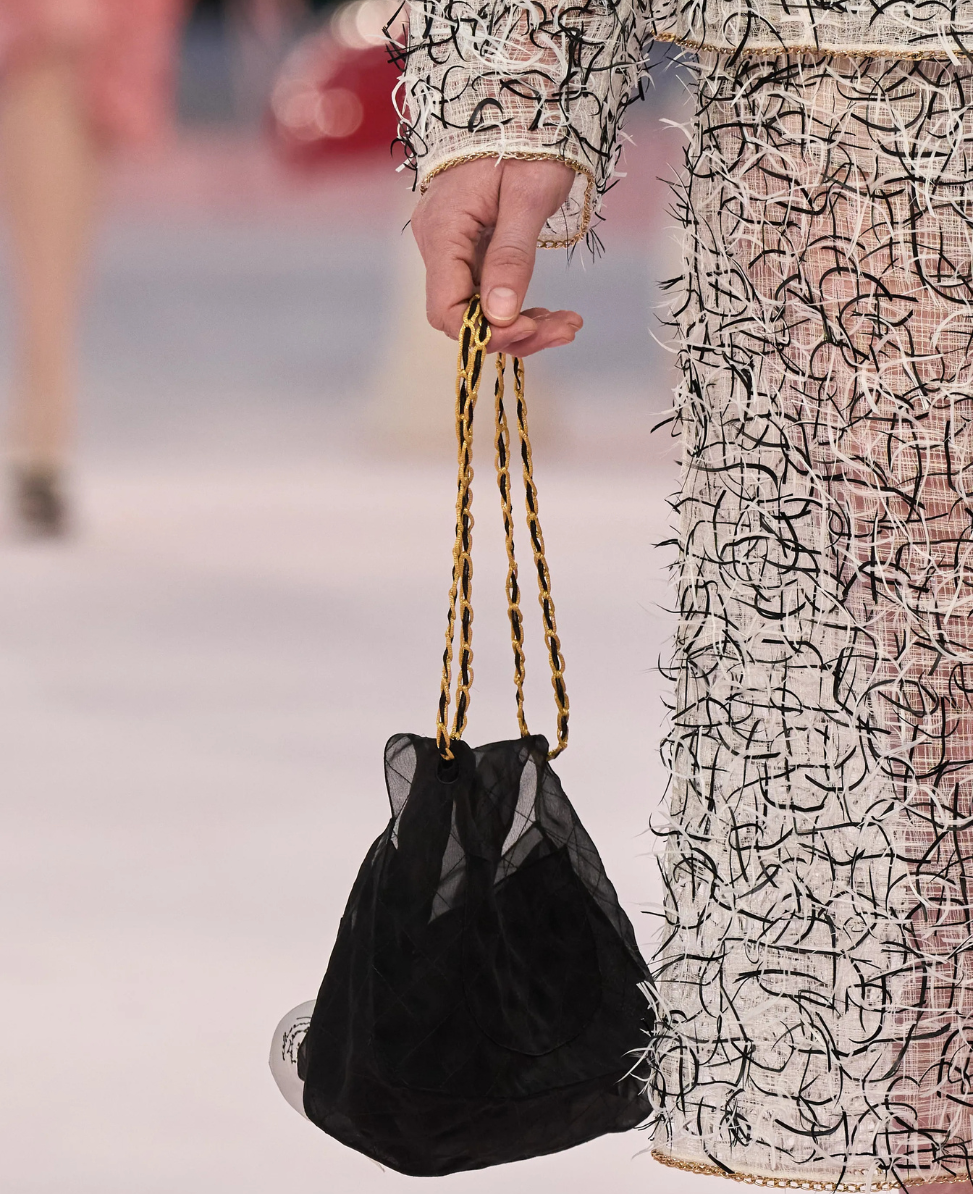
Couture is more than luxury. It is a discipline of patience. Hours of embroidery, sculpted tailoring, fittings that refine rather than rush. It is fashion at its most deliberate; a reminder that making can still be sacred.

At Dior, Jonathan Anderson’s first haute couture collection for the house unfolded like a garden in motion. Beneath moss and floral cyclamen; the same blooms gifted to him by John Galliano, dresses bloomed with embroidered flowers and organic silhouettes that referenced nature’s logic rather than ornament alone. The show merged flora with sculptural form, drawing on the rhythms of growth and adaptation as much as on Christian Dior’s own devotion to gardens. 

At Chanel, Matthieu Blazy’s couture debut for the Maison was staged within a dreamlike woodland of giant pastel mushrooms and weeping willows under the Grand Palais’s glass vault. Birds; symbols of freedom and lightness, flitted through the collection as motifs and textures, while classic Chanel codes were distilled into translucence and feather-like embroidery. Blazy’s presentation arrived exactly 111 years after Gabrielle “Coco” Chanel unveiled the very first couture collection for the house, a poetic echo of legacy and renewal. 
Reviews were mixed in the aftermath. Some critics longed for bolder departures; others praised the integrity of craft and heritage. Discord over cohesion and impact surfaced alongside admiration for technique; a reminder that couture’s evolution is always negotiated in whispers rather than shouts. 
Personally, the grounded poetry of Chanel; its earthy whimsy and intimacy with craft, resonated more with me this season. Yet both Dior and Chanel shared a meaningful ambition: to carry couture forward without severing its roots. Neither rejected history nor surrendered to spectacle. Instead, they asked couture to grow organically, like blooms opening in quiet light.
And perhaps that is couture’s enduring power; the future, patiently stitched.